
Light Lab
Quick tools for early planning that show the principles; the final selection comes from photometric data for the exact luminaire.
Beam and spill light
Set a mounting height, a beam angle and a field angle to see the pool of light below and how far spill light spreads. Diameter = 2 × height × tan(angle ÷ 2).
At 4.0 m, a 36° beam lights a pool about 2.6 m across. With a 72° field angle, spill light spreads about 5.8 m across.
These sliders need JavaScript. Without it, the figure and the result show one fixed example.
- Beam angle
- The full angle measured between the edges where intensity falls to 50% of its peak.
- Field angle
- The full angle measured between the edges where intensity falls to 10% of its peak. Some light also falls outside the field angle. The slider starts at twice the beam angle, a rough guide only; set it from the luminaire's photometric data where you have it.
- Spill light
- The light between the beam edge and the field edge, where intensity falls from 50% to 10% of its peak.
Light does not stop at these edges: intensity keeps falling beyond them. For design, use the photometric data of the exact luminaire.
- Beam
- Spill light
How many lights for a room
Use the lumen method to estimate how many luminaires a room needs. Enter the room's size and ceiling height, the type of space and the light output of one luminaire.
This estimate needs JavaScript. It uses the lumen method: number of luminaires = target lux × floor area ÷ (lumens per luminaire × utilisation factor × maintenance factor), rounded up.
A first estimate for early planning. A lighting design, with photometric data for the exact luminaire, confirms it.
Assumptions
- Maintenance factor 0.8, which allows for the fall in light output as luminaires age and collect dust.
- Room index K = L × W ÷ (h × (L + W)), for length L and width W. Here h is the ceiling height minus a 0.85 m working plane. The luminaires sit in the ceiling; the light level is the average on the working plane.
- Utilisation factor 0.40 below K = 1, 0.50 from K = 1, 0.60 from K = 2 and 0.65 from K = 3. These values assume recessed downlights in a room with light-coloured surfaces.
- The target light level is the value for the chosen type of space in the light levels table below.
Light levels by space
Typical levels for common spaces, each with its source. Values are maintained averages unless a row says otherwise: light-sensitive exhibits are upper limits, and road rows in cd/m² are luminance.
Retail
| Space or task | Typical level | Source |
|---|---|---|
| General sales areaRequired value; the 2021 edition also lists a higher 'modified' value for demanding conditions. | 300 lux | Source 1, Table 35 (Retail premises), sales area |
| Till (checkout) area and wrapping tableCounter tasks; the same 500 lx applies to both. | 500 lux | Source 1, Table 35 (Retail premises), till area and wrapping table |
| Fitting roomsNew in the 2021 edition; 'modified' value 500 lx. | 300 lux | Source 1, Table 35 (Retail premises), fitting room - new application in the 2021 edition |
| Stock / storage area (retail premises)New in the 2021 edition; 'modified' value 500 lx. | 300 lux | Source 1, Table 35 (Retail premises), storage area - new application in the 2021 edition |
| Shops and supermarkets, general (India, NBC 2016)NBC range 300-500-750 (middle value shown); checkouts are also 300-500-750. | 500 lux | Source 2, Table 4, items 19.1, 19.2 and 19.3.1 (retailing) |
Hospitality
| Space or task | Typical level | Source |
|---|---|---|
| Hotel reception / cashier deskCounter value; screen or desk work at reception is an office task (500 lx). NBC 2016 also gives 300 lx (range 200-500). | 300 lux | Source 1, Table 37 (Restaurants and hotels), reception/cashier desk and porters' desk |
| Hotel lobby / entrance hall200 lx where visitor numbers are high ('modified' value). | 100 lux | Source 1, Table 36 (Public premises, general areas), entrance halls |
| Restaurant / dining room, tablesEN 12464-1 has no lux value for dining rooms (atmosphere-led in the 2011 table). NBC 2016 gives 50-200 lx; the National Lighting Code 2010 advises at least 100 lx on tables, applied with discretion. | 100 lux | Source 3, SP 72:2010 Part 5 Section 5, clause 5.1 (at least 100 lx on tables) |
| Commercial kitchenFood-preparation work; school kitchens are also 500 lx. NBC 2016 food preparation and cooking: 300-500-750. | 500 lux | Source 1, Table 37 (Restaurants and hotels), kitchen |
| Self-service restaurantGeneral lighting for canteen-style dining. NBC 2016 canteens and dining rooms: 150-200-300. | 200 lux | Source 1, Table 37 (Restaurants and hotels), self-service restaurant |
| Hotel guest room, generalNBC range 30-50-100 (middle value shown). Local lighting at bed head and writing table advised. | 50 lux | Source 2, Table 4, item 20.5.5 (hotels, bed rooms) |
| Hotel corridor'Modified' value 150 lx. The 2011 hotel table also listed corridors at 100 lx. NBC 2016 corridors, passageways, stairs: 50-100-150. | 100 lux | Source 1, Table 9 (Traffic zones inside buildings), circulation areas and corridors |
Offices
| Space or task | Typical level | Source |
|---|---|---|
| General office and open-plan desk workApplies to cell and open-plan offices; 'modified' value 1,000 lx. NBC 2016 general offices: 300-500-750. | 500 lux | Source 1, Table 34 (Offices), row 34.2 - writing, typing, reading, data processing |
| Deep-plan general office (India, NBC 2016)NBC range 500-750-1000 (middle value shown); ordinary general offices (17.1.1) are 300-500-750. | 750 lux | Source 2, Table 4, item 17.1.2 (deep plan general offices) |
| Meeting / conference room'Modified' value 1,000 lx; lighting should be controllable. NBC 2016 conference rooms: 300-500-750. | 500 lux | Source 1, Table 34 (Offices), conference and meeting rooms |
| Reception desk'Modified' value 750 lx; regular screen work at the desk should be lit as an office task. | 300 lux | Source 1, Table 34 (Offices), reception desk |
| Office corridor / circulation'Modified' value 150 lx. | 100 lux | Source 1, Table 9 (Traffic zones inside buildings), circulation areas and corridors |
| Archive / filing store'Modified' value 300 lx. NBC 2016 filing rooms: 200-300-500 (300). | 200 lux | Source 1, Table 34 (Offices), archiving |
Education
| Space or task | Typical level | Source |
|---|---|---|
| Classroom, general activitiesRaised from 300 lx in the 2011 edition; 'modified' value 1,000 lx. | 500 lux | Source 1, Table 44 (Educational premises, training buildings), row 44.1 |
| Lecture hall / auditorium'Modified' value 750 lx; in the seating area during a lecture 200 lx (300 modified). | 500 lux | Source 1, Table 44 (Educational premises), auditorium and lecture halls |
| Library, reading areas'Modified' value 750 lx. The 2021 edition also lists general library lighting at 300 lx and bookshelves at 200 lx (vertical). | 500 lux | Source 1, Tables 41 (Libraries) and 44 (Educational premises), library reading areas |
| Laboratory (practical rooms and laboratories)NBC 2016 laboratories: 300-500-750 (500). | 500 lux | Source 1, Table 44 (Educational premises), practical rooms and laboratories |
| School corridor / circulation'Modified' value 150 lx. | 100 lux | Source 1, Table 44 (Educational premises), circulation areas and corridors |
| Sports hall, general school useSchool use only; 'modified' value 500 lx. Competition sport is governed by EN 12193. | 300 lux | Source 1, Table 44 (Educational premises), sports halls, gymnasiums, swimming pools (general use) |
| Teaching space, general (India, NBC 2016)NBC range 200-300-500 (middle value shown). EN 12464-1:2021 requires 500 lx for classrooms. | 300 lux | Source 2, Table 4, item 21.2 (education, teaching spaces) |
Healthcare
| Space or task | Typical level | Source |
|---|---|---|
| Patient room, general lightingReading light 300 lx; simple examination 300 lx; examination and treatment 1,000 lx; night lighting 5 lx. | 100 lux | Source 1, Table 47 (Health care premises, patient rooms), general lighting |
| Patient room, reading lightMeasured on the reading plane at the bed. | 300 lux | Source 1, Table 47 (Health care premises, patient rooms), reading lighting |
| Examination room, general lightingExamination and treatment: 1,000 lx. | 500 lux | Source 1, Table 48 (Health care premises, examination rooms - general), general lighting |
| Waiting room'Modified' value 300 lx (waiting rooms where people read). NBC 2016 surgery waiting rooms: 100-150-200. | 200 lux | Source 1, Table 45 (Health care premises, rooms for general use), waiting rooms |
| Corridor, daytimeReduced from 200 lx in the 2011 edition; 'modified' value 200 lx. | 100 lux | Source 1, Table 45 (Health care premises, rooms for general use), corridors during the day |
| Corridor, nightNight-time orientation lighting. | 50 lux | Source 1, Table 45 (Health care premises, rooms for general use), corridors during the night |
| Hospital corridor (India, NBC 2016)NBC range 100-150-200 (middle value shown); ward corridors by day 150-200-300, at night 5-10. | 150 lux | Source 2, Table 4, item 20.4.3.1 (hospitals, corridors - general) |
Museums and galleries
| Space or task | Typical level | Source |
|---|---|---|
| Museum / gallery, exhibits insensitive to lightNBC range 200-300-500 (middle value shown). The 2011 edition of EN 12464-1 gave no lux figure for museum exhibits (it is set by the exhibits); the 2021 Table 40 could not be read. | 300 lux | Source 2, Table 4, item 20.7.1 (museums and art galleries) |
| Light-sensitive exhibits (maximum): oil and tempera paintings, undyed leather, bone, ivory, woodMaximum illuminance at the object, not a design target for the room. Same 150 lx maximum in NBC 2016 item 20.7.2; Museums Galleries Scotland advises 200 lx for moderately sensitive materials. | 150 lux | Source 5, Recommended Light Levels for Museum Collections, 'less sensitive collections' |
| Extremely light-sensitive exhibits (maximum): textiles, watercolours, prints and drawings, photographsMaximum illuminance at the object, not a design target for the room. Same 50 lx maximum in NBC 2016 item 20.7.3 and in Museums Galleries Scotland guidance. | 50 lux | Source 5, Recommended Light Levels for Museum Collections, 'sensitive collections' |
Factories and warehouses
| Space or task | Typical level | Source |
|---|---|---|
| Assembly work, rough'Modified' value 300 lx. Metalworking table; other industries have their own rows. Rail-vehicle maintenance halls (Table 61) use the same 200/300/500/750 steps. | 200 lux | Source 1, Table 26 (Metalworking and processing), assembly - rough |
| Assembly work, medium'Modified' value 500 lx. Metalworking table; other industries have their own rows. | 300 lux | Source 1, Table 26 (Metalworking and processing), assembly - medium |
| Assembly work, fine'Modified' value 750 lx. Precision assembly is 750 lx. Metalworking table; other industries have their own rows. | 500 lux | Source 1, Table 26 (Metalworking and processing), assembly - fine |
| Warehouse, rack storage aisles (floor level)New in the 2021 edition; measured at floor level; 'modified' value 200 lx. Rack face (vertical) 75 lx. | 150 lux | Source 1, Table 13 (Logistics and storage), rack storage - floor |
| Warehouse, central logistics corridor (heavy traffic)New in the 2021 edition; 'modified' value 500 lx. | 300 lux | Source 1, Table 13 (Logistics and storage), central logistics corridor (heavy traffic) |
| Loading / unloading areaNew in the 2021 edition; 'modified' value 300 lx. | 200 lux | Source 1, Table 13 (Logistics and storage), unloading/loading areas |
| Warehouse, bulk storage with limited detail (India, NBC 2016)NBC range 50-100-150 (middle value shown). | 100 lux | Source 2, Table 4, item 16.2.1 (warehouses and bulk stores) |
| Warehouse, goods needing perception of detail (India, NBC 2016)NBC range 100-150-200 (middle value shown); loading bays (item 16.2.3.4) are also 100-150-200. | 150 lux | Source 2, Table 4, item 16.2.2 (warehouses and bulk stores) |
| Machine shop, rough bench and machine work (India, NBC 2016)NBC range 200-300-500 (middle value shown). | 300 lux | Source 2, Table 4, item 7.3.1 (machine and tool shops) |
| Machine shop, medium bench and machine work (India, NBC 2016)NBC range 300-500-750 (middle value shown). | 500 lux | Source 2, Table 4, item 7.3.2 (machine and tool shops) |
| Machine shop, fine bench and machine work (India, NBC 2016)NBC range 500-750-1000 (middle value shown). | 750 lux | Source 2, Table 4, item 7.3.3 (machine and tool shops) |
Rail and metro
| Space or task | Typical level | Source |
|---|---|---|
| Platform, fully enclosed, low passenger numbersLowered from 100 lx in the 2011 edition. | 50 lux | Source 1, Table 61 (Railway facilities; informative Annex D), platforms - low number of passengers |
| Platform, fully enclosed, medium passenger numbersNew in the 2021 edition; special attention to the platform edge; avoid glare to drivers and passengers; measured at floor level. | 100 lux | Source 1, Table 61 (Railway facilities; informative Annex D), platforms - medium number of passengers |
| Platform, fully enclosed, high passenger numbersValue carried over from the 2011 edition (large number of persons); it is not among the values licht.forum 60 lists as changed in 2021. | 200 lux | Source 1, Railway facilities, platforms - large number of passengers (ref. 5.53.2 in the 2011 edition; Table 61 in 2021) |
| Stairs and escalators, low passenger numbersNew in the 2021 edition; avoid glare to passengers; special attention to stair approaches. | 50 lux | Source 1, Table 61 (Railway facilities; informative Annex D), stairs and escalators - low passenger numbers |
| Stairs and escalators, medium passenger numbersNew in the 2021 edition; avoid glare to passengers. | 100 lux | Source 1, Table 61 (Railway facilities; informative Annex D), stairs and escalators - medium passenger numbers |
| Stairs and escalators, high passenger numbersNew in the 2021 edition; avoid glare to passengers. | 200 lux | Source 1, Table 61 (Railway facilities; informative Annex D), stairs and escalators - high passenger numbers |
| Ticket hall / concourseValue from the 2011 edition; it is not among the values licht.forum 60 lists as changed in 2021. NBC 2016 station concourse: 150-200-300. | 200 lux | Source 1, Railway facilities, ticket halls and concourses (2011 edition, Table 5.53; Table 61 in 2021) |
| Railway platform, covered (India, NBC 2016)NBC range 30-50-100 (middle value shown); light and mark the platform edge clearly. Open platforms: 20 lx (item 22.2.10). | 50 lux | Source 2, Table 4, item 22.2.9 (railway stations, platforms - covered) |
| Railway ticket office (India, NBC 2016)NBC range 300-500-750 (middle value shown); information offices and coach-station ticket offices are also 300-500-750. | 500 lux | Source 2, Table 4, item 22.2.1 (railway stations, ticket office) |
Streets
| Space or task | Typical level | Source |
|---|---|---|
| Road class M1 (motorised traffic)Minimum maintained average road-surface luminance (dry road); Uo >= 0.40, Ul >= 0.70. | 2 cd/m² (average road-surface luminance) | Source 4, EN 13201-2:2015, lighting class M1 |
| Road class M2 (motorised traffic)Minimum maintained average road-surface luminance (dry road); Uo >= 0.40, Ul >= 0.70. | 1.5 cd/m² (average road-surface luminance) | Source 4, EN 13201-2:2015, lighting class M2 |
| Road class M3 (motorised traffic)Minimum maintained average road-surface luminance (dry road); Uo >= 0.40, Ul >= 0.60. | 1 cd/m² (average road-surface luminance) | Source 4, EN 13201-2:2015, lighting class M3 |
| Road class M4 (motorised traffic)Minimum maintained average road-surface luminance (dry road); Uo >= 0.40, Ul >= 0.60. | 0.75 cd/m² (average road-surface luminance) | Source 4, EN 13201-2:2015, lighting class M4 |
| Road class M5 (motorised traffic)Minimum maintained average road-surface luminance (dry road); Uo >= 0.35, Ul >= 0.40. | 0.5 cd/m² (average road-surface luminance) | Source 4, EN 13201-2:2015, lighting class M5 |
| Road class M6 (motorised traffic)Minimum maintained average road-surface luminance (dry road); Uo >= 0.35, Ul >= 0.40. | 0.3 cd/m² (average road-surface luminance) | Source 4, EN 13201-2:2015, lighting class M6 |
| Road class C0 (conflict areas)Minimum maintained average horizontal illuminance for conflict areas such as junctions and roundabouts; Uo >= 0.40. | 50 lux | Source 4, EN 13201-2:2015, lighting class C0 |
| Road class C1 (conflict areas)Minimum maintained average horizontal illuminance for conflict areas such as junctions and roundabouts; Uo >= 0.40. | 30 lux | Source 4, EN 13201-2:2015, lighting class C1 |
| Road class C2 (conflict areas)Minimum maintained average horizontal illuminance for conflict areas such as junctions and roundabouts; Uo >= 0.40. | 20 lux | Source 4, EN 13201-2:2015, lighting class C2 |
| Road class C3 (conflict areas)Minimum maintained average horizontal illuminance for conflict areas such as junctions and roundabouts; Uo >= 0.40. | 15 lux | Source 4, EN 13201-2:2015, lighting class C3 |
| Road class C4 (conflict areas)Minimum maintained average horizontal illuminance for conflict areas such as junctions and roundabouts; Uo >= 0.40. | 10 lux | Source 4, EN 13201-2:2015, lighting class C4 |
| Road class C5 (conflict areas)Minimum maintained average horizontal illuminance for conflict areas such as junctions and roundabouts; Uo >= 0.40. | 7.5 lux | Source 4, EN 13201-2:2015, lighting class C5 |
| Road class P1 (pedestrian and low-speed areas)Minimum maintained average horizontal illuminance for footways, cycle paths, residential streets and parking areas; Emin >= 3.00 lx. | 15 lux | Source 4, EN 13201-2:2015, lighting class P1 |
| Road class P2 (pedestrian and low-speed areas)Minimum maintained average horizontal illuminance for footways, cycle paths, residential streets and parking areas; Emin >= 2.00 lx. | 10 lux | Source 4, EN 13201-2:2015, lighting class P2 |
| Road class P3 (pedestrian and low-speed areas)Minimum maintained average horizontal illuminance for footways, cycle paths, residential streets and parking areas; Emin >= 1.50 lx. | 7.5 lux | Source 4, EN 13201-2:2015, lighting class P3 |
| Road class P4 (pedestrian and low-speed areas)Minimum maintained average horizontal illuminance for footways, cycle paths, residential streets and parking areas; Emin >= 1.00 lx. | 5 lux | Source 4, EN 13201-2:2015, lighting class P4 |
| Road class P5 (pedestrian and low-speed areas)Minimum maintained average horizontal illuminance for footways, cycle paths, residential streets and parking areas; Emin >= 0.60 lx. | 3 lux | Source 4, EN 13201-2:2015, lighting class P5 |
| Road class P6 (pedestrian and low-speed areas)Minimum maintained average horizontal illuminance for footways, cycle paths, residential streets and parking areas; Emin >= 0.40 lx. | 2 lux | Source 4, EN 13201-2:2015, lighting class P6 |
| Important traffic routes carrying fast traffic (India, group A1)Recommended average illuminance on the road surface; Emin/Eav >= 0.4. | 30 lux | Source 3, SP 72:2010 Part 8, Table 3 (IS classification), Group A1 |
| Main city streets, arterial and through roads (India, group A2)Recommended average illuminance on the road surface; Emin/Eav >= 0.4. | 15 lux | Source 3, SP 72:2010 Part 8, Table 3 (IS classification), Group A2 |
| Secondary roads with considerable traffic and shopping streets (India, group B1)Recommended average illuminance on the road surface; Emin/Eav >= 0.3. | 8 lux | Source 3, SP 72:2010 Part 8, Table 3 (IS classification), Group B1 |
| Secondary roads with light traffic (India, group B2)Recommended average illuminance on the road surface; Emin/Eav >= 0.3. Typical residential-street level in Indian practice; NLC 2010 clause 8.1.2 places residential major access roads in CIE classes M4-M5. | 4 lux | Source 3, SP 72:2010 Part 8, Table 3 (IS classification), Group B2 |
Typical values for early planning. The project specification, and the current editions of the standards it calls up, govern. Homes are not listed, because we cannot cite a current standard for them.
Sources
- EN 12464-1:2021 Light and lighting - Lighting of work places - Part 1: Indoor work places (replaces EN 12464-1:2011). CEN (CEN/TC 169); published nationally e.g. as BS EN 12464-1:2021 and DIN EN 12464-1:2021-11, 2021.
- National Building Code of India 2016 (SP 7:2016), Volume 2, Part 8 Building Services, Section 1 Lighting and Natural Ventilation, Table 4 Recommended Values of Illuminance. Bureau of Indian Standards (BIS), 2016.
- SP 72:2010 National Lighting Code 2010 (Part 8 Road Lighting, Tables 2-4 and clause 8.1.2; Part 5 Section 5 clause 5.1). Bureau of Indian Standards (BIS), 2010.
- EN 13201-2:2015 Road lighting - Part 2: Performance requirements. CEN (CEN/TC 169), 2015.
- Recommended Light Levels for Museum Collections While on Exhibition (2024). Texas Historical Commission, 2024.
Colour rendering
The colour rendering index (CRI, or Ra) describes how faithfully a light source shows colours. Compare the photo with a simulation of the same stall under a CRI 80 source.
CRI 90+CRI 80, simulated

Under a CRI 80 source, strong reds such as the tomatoes tend to look duller than under a CRI 90+ source. Greens such as the chillies can look duller too.
Illustrative simulation. Real differences depend on the source and the object.
Colour temperature
Colour temperature describes how warm or cool white light looks, in kelvin (K). Lower values look warmer, higher values cooler.
- 2700 KVery warm
Residences, restaurants and hospitality spaces where a relaxed, intimate feel matters.
- 3000 KWarm
Hotels, residences and stores with warm materials such as wood, leather and fabric.
- 3500 KNeutral
Stores and mixed-use spaces that want some warmth with a crisper look.
- 4000 KCool neutral
Offices, circulation areas and displays of cool-toned products such as white goods and metal.
Guidance, not a measured result. Not every luminaire family offers every colour temperature: see each family's options.
See it in a space
The same scene looks warmer or cooler as the colour temperature changes, from 2700 K to 6500 K.
Choose a space
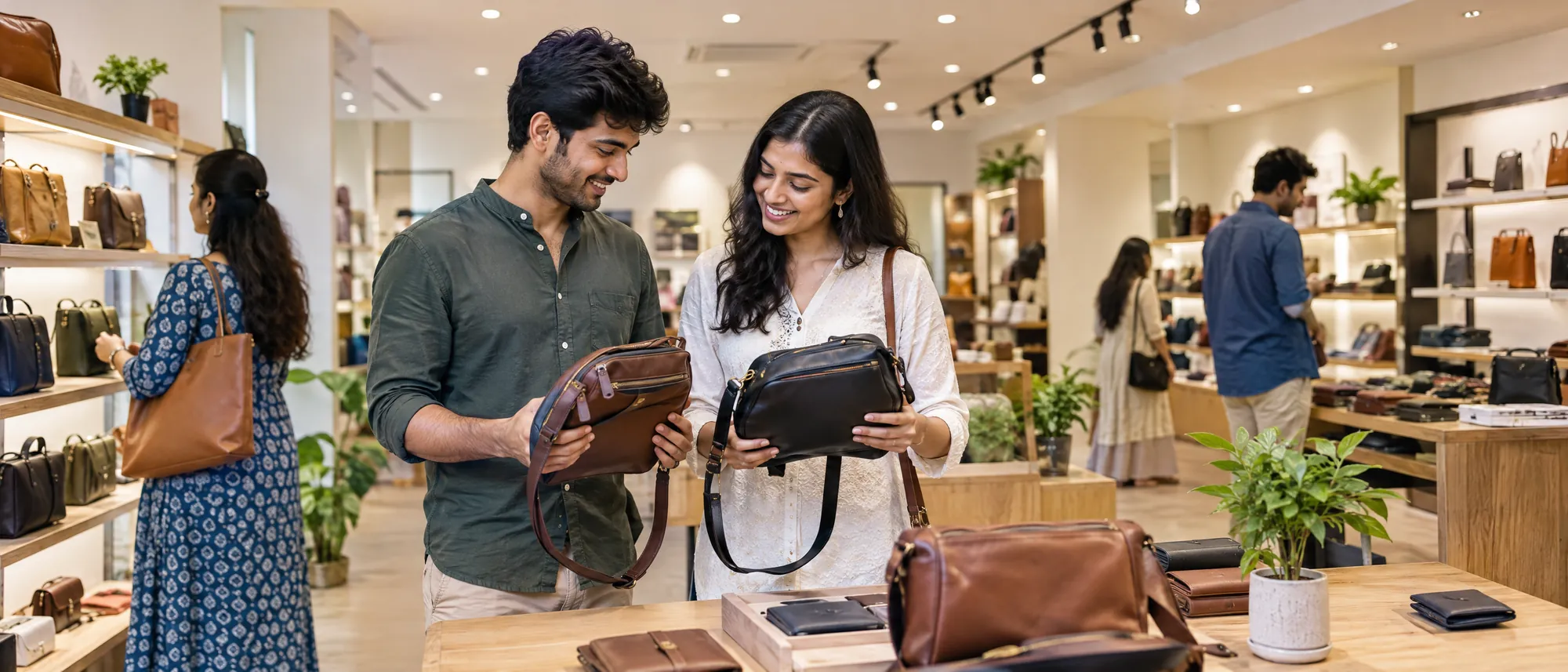
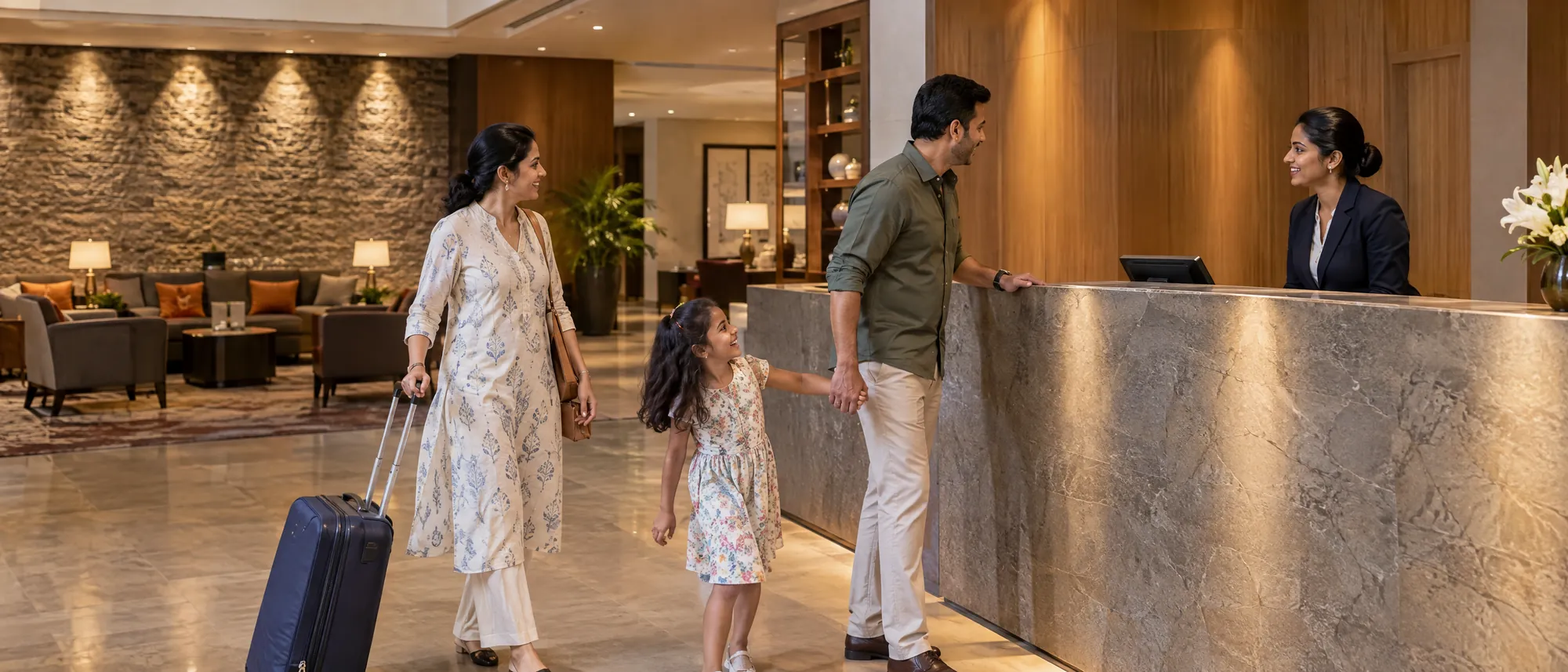
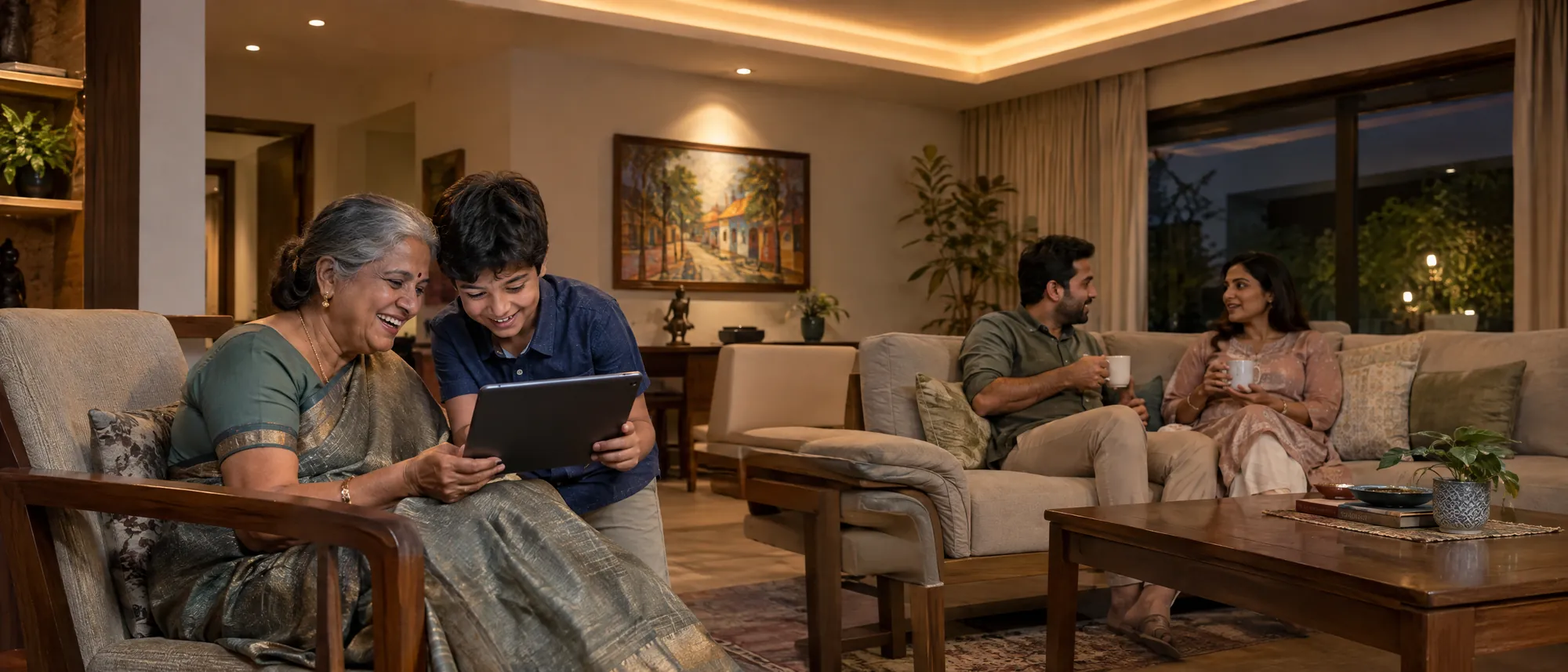

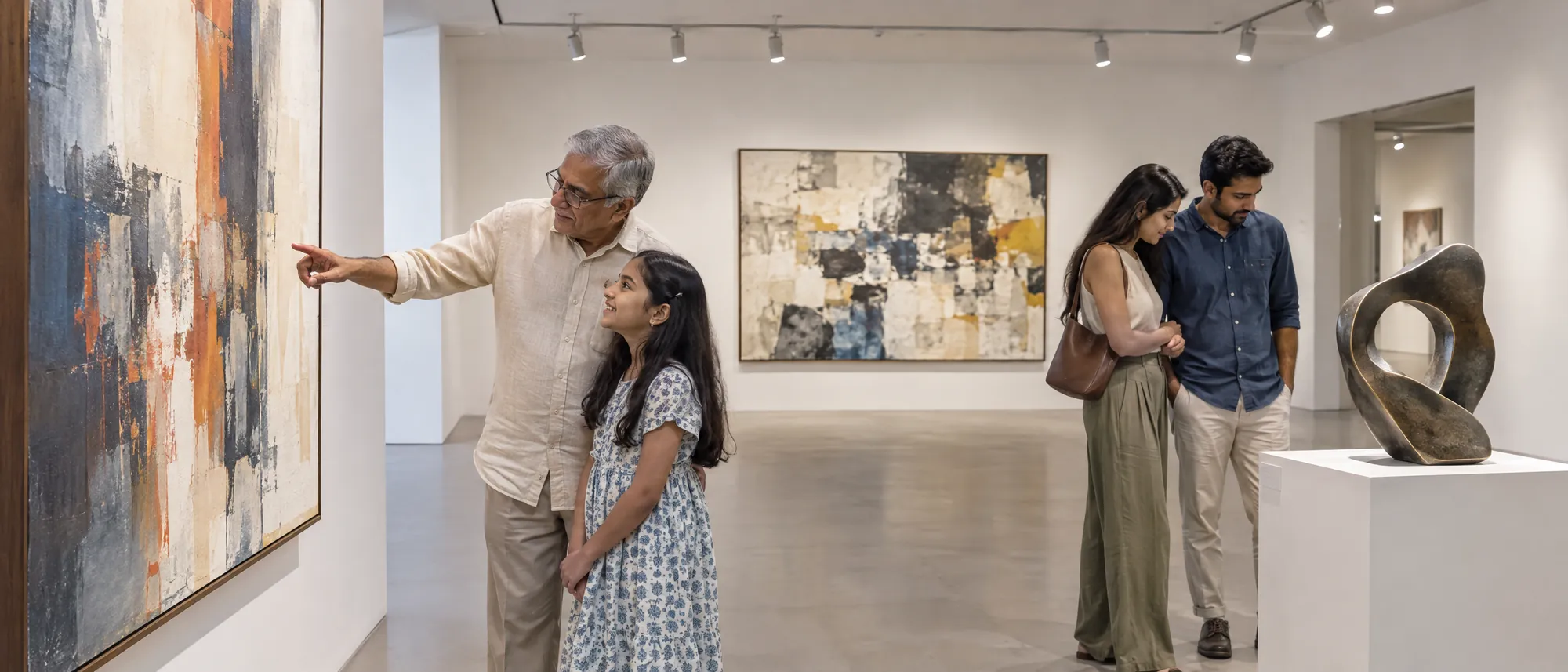
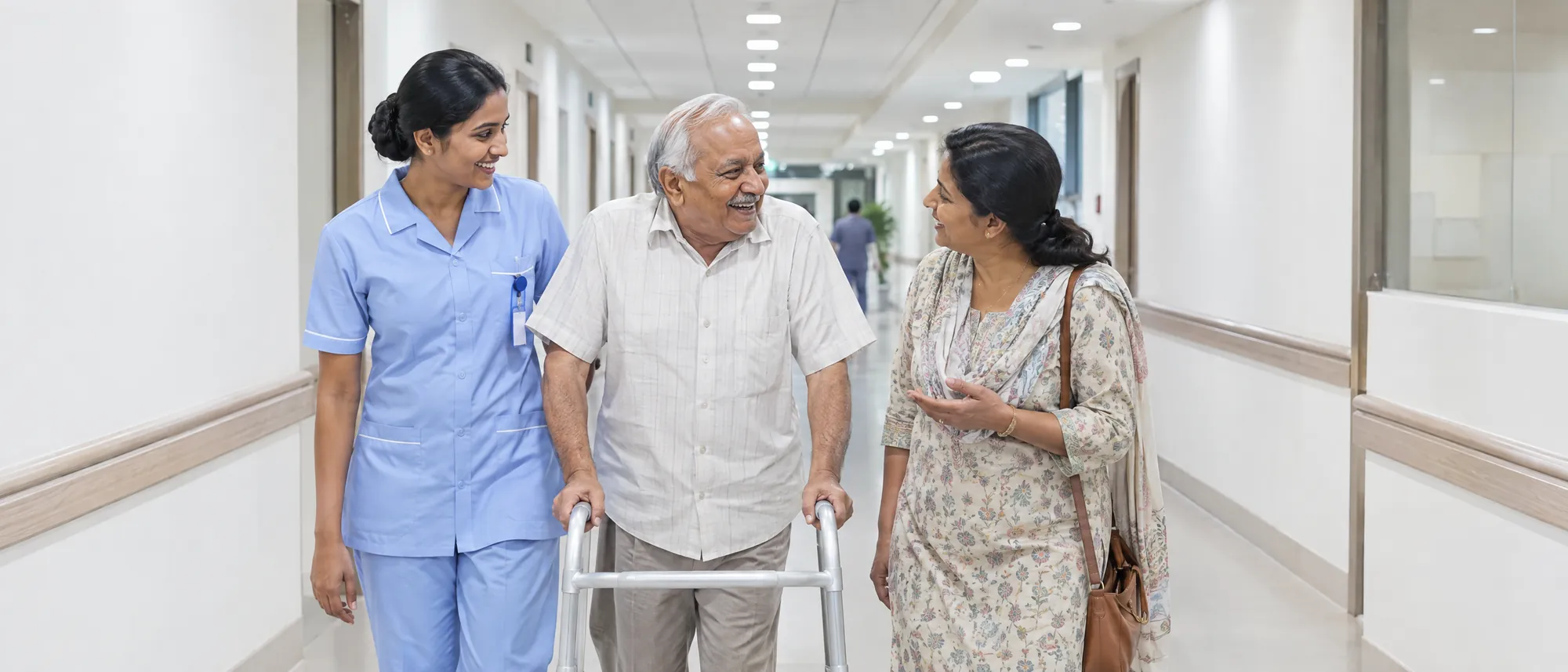
Illustrative simulation of the same scene under different colour temperatures. Screens vary. The simulation treats each photo as lit at 3500 K and shifts its colour from there.
Start a project
Tell us about the space, the timeline and what you need. Our lighting team will get back to you with questions or a proposal.