DMX hardware essentials for architectural lighting
Controllers, splitters, cable and terminators decide whether a DMX installation is reliable. What to look for in each, and how to plan for growth, integration and maintenance.
Whether it is a corporate facade or a public infrastructure project, a DMX lighting system is only as reliable as its hardware. This guide covers the components and the planning decisions behind a dependable installation.
Controllers
The controller turns the design into lighting commands. When you select one, check:
- How many universes it can run at once.
- Its interfaces: manual control, network connection and integration with building management systems.
- Reliability features, such as backup and fail-over, for critical installations.
- The safety markings and approvals your project and market require.
Splitters
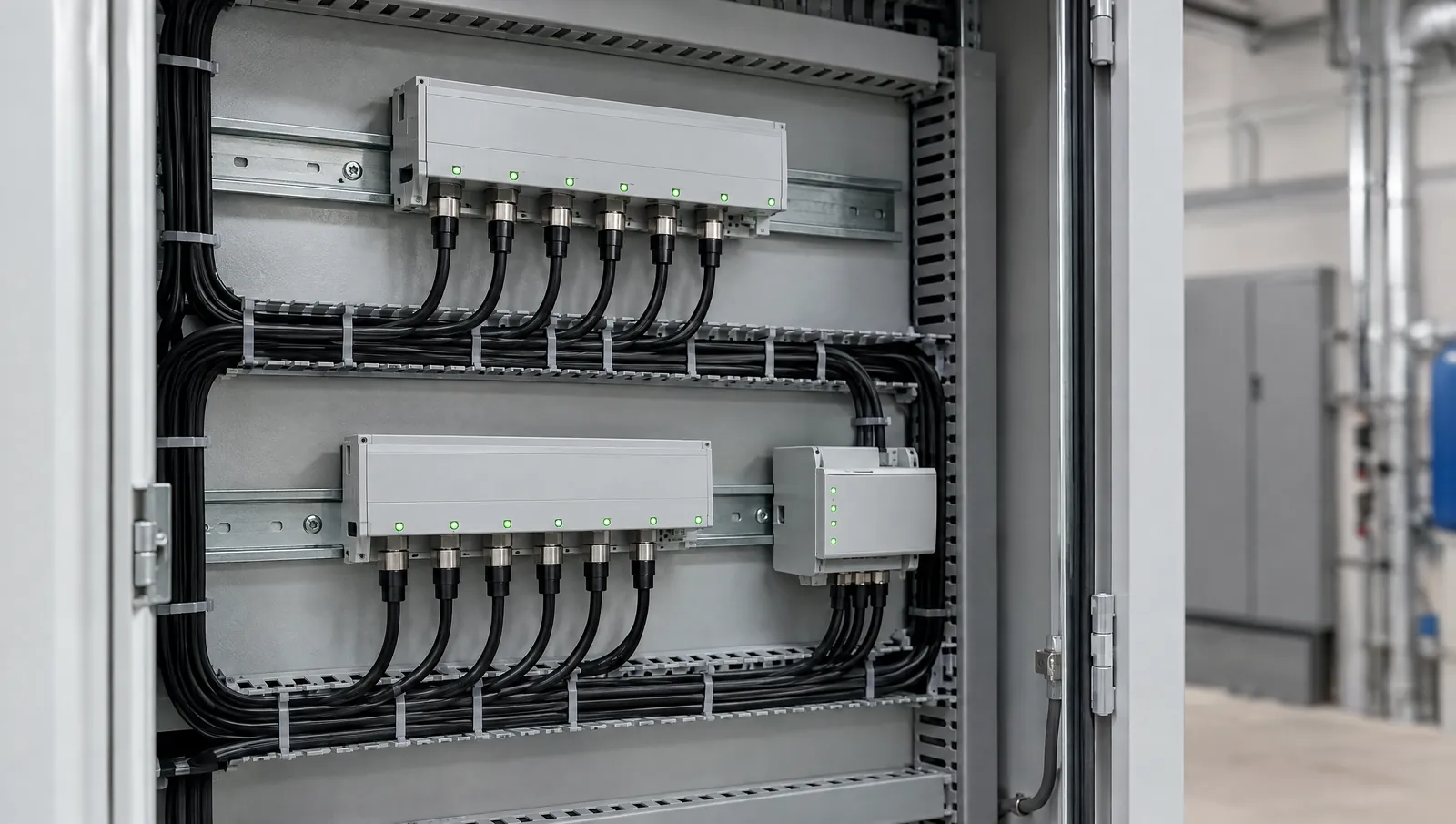
Splitters, also called opto-splitters, divide one DMX line into several isolated branches. Look for:
- Optical isolation between input and outputs, to prevent ground loops and protect the system.
- Signal regeneration on each output, to keep the signal strong over distance.
- Enough outputs for today's layout and for expansion.
- Status indicators for quick fault-finding.
Cable
- Use shielded cable made for DMX data, with good-quality copper conductors.
- Use connectors with an IP rating suited to outdoor runs.
- Check that the cable meets the fire and safety standards the project specifies.
Terminators
A 120 Ω terminator at the end of each DMX line prevents signal reflections. It is small and often forgotten, but every line needs one. Use weather-resistant terminators outdoors.
Designing the system
- Growth: allow for extra universes, spare splitter outputs and spare data ports.
- Environment: temperature range, moisture and UV exposure for outdoor equipment.
- Maintenance: place equipment where it can be reached, plan service points and keep spares.
- Integration: building management, emergency lighting controls, daylight sensing and event software.
Good practice
- Document system diagrams, DMX addresses and universes.
- Test signal integrity, loads and backup systems before handover.
- Maintain the system with scheduled inspections and monitoring.
- Protect critical systems with a UPS, surge protection, backup controllers and emergency presets where the project needs them.
Markings and ratings
For commercial projects, confirm the markings and ratings the specification asks for, such as CE marking, RoHS compliance and IP ratings suited to each location, and keep the documents with the project records.
Hublit supplies DMX signal hardware, from an amplifier to eight-way RDM splitters and an Art-Net converter, and can plan and commission the control system as part of a project. The included scope is confirmed in each offer.