Understanding DMX512, the language of lighting control
DMX512 is the standard protocol behind colour-changing facades and dynamic lighting. How it works, from controllers and addresses to channels and universes, and how to set up a reliable system.
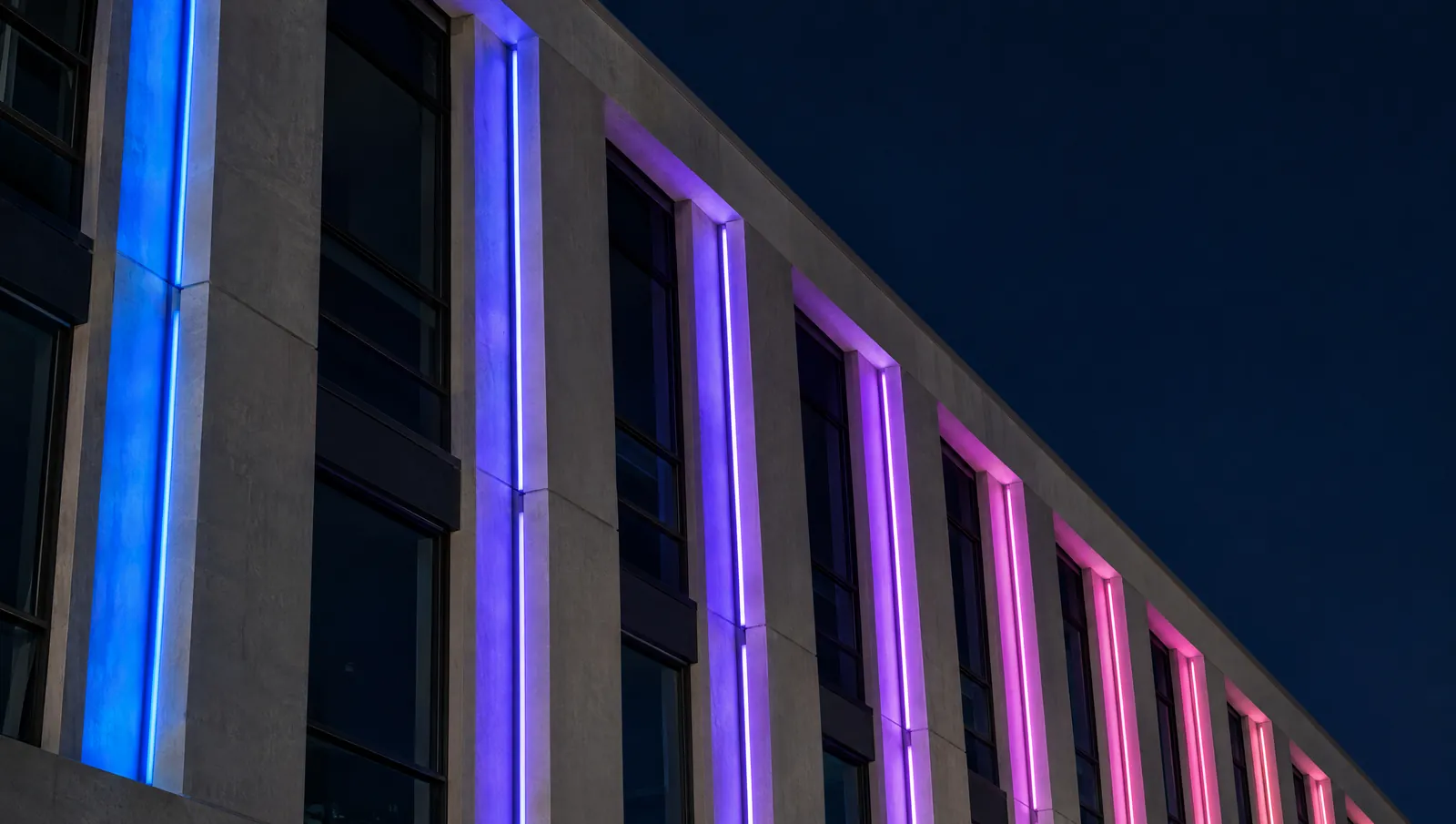
Colour-changing facades and dynamic interiors rely on a control protocol that every device on the line understands. For most of them, that protocol is DMX512.
What DMX512 is
DMX512 (Digital Multiplex) is a standard protocol for controlling lighting and effects. It was first published in 1986 and is now maintained as ANSI E1.11. One DMX line carries up to 512 control channels from a controller to the devices connected to it.
How it works
- Controller: sends the commands to every device on the line.
- Address: each device has a start address that tells it which channels to follow.
- Channels: each property of a luminaire, such as intensity, red, green, blue or white, uses its own channel.
- Universe: one DMX line of 512 channels. Larger installations use several universes, often carried over Ethernet with protocols such as Art-Net.
The parts of a system
- Controllers send the commands, from simple scene controllers to networked systems.
- Decoders translate DMX into outputs for LED strips and luminaires without a DMX input of their own.
- DMX-compatible luminaires accept DMX directly.
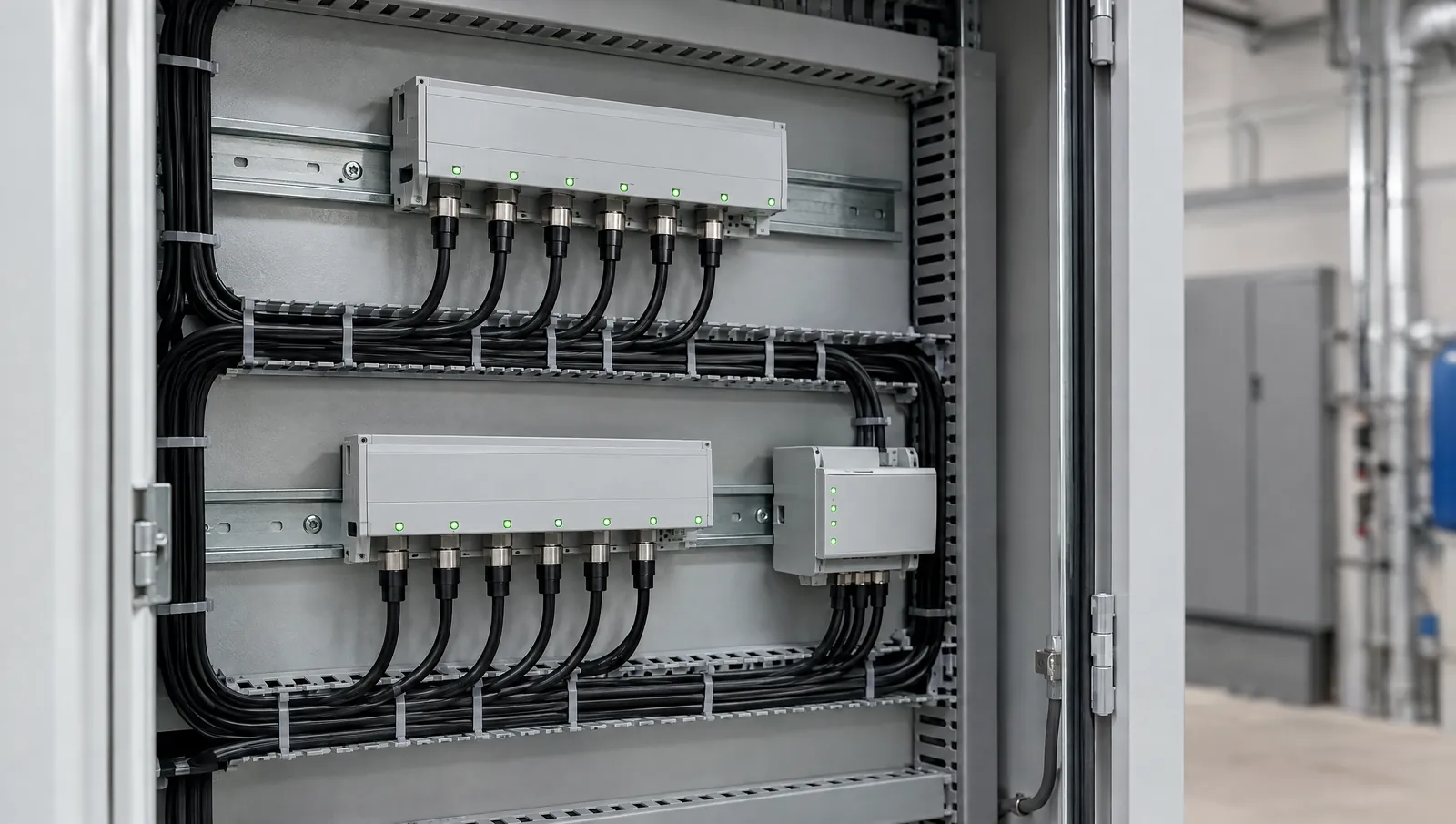
- Signal hardware, such as amplifiers, splitters and converters, keeps the signal clean across long runs and many branches.
Setting up
- Plan the layout: luminaire positions, power requirements and cable routes.
- Address the devices: give each one a unique start address, avoid overlaps and record the addressing scheme.
- Connect and terminate: daisy-chain the devices with DMX cable and fit a terminator at the end of each line.
Tips for reliable control
- Start simple, test, then expand.
- Leave spare channels and capacity for later additions.
- Use cable made for DMX, add amplifiers or splitters on long runs and branches, and terminate every line.
Troubleshooting
- Flickering or erratic luminaires: usually addressing, termination or interference.
- No response: check the addresses, the connections and the controller output.
Where DMX is used
Facade and landmark lighting, colour-changing scenes for festivals and events, retail and hospitality interiors, and entertainment spaces.
Hublit's DMX controls cover the signal path: an amplifier, eight-way RDM splitters and an Art-Net to DMX converter. Talk to our lighting team about the control plan for your facade.